Thursday, January 9, 2014

The test that could diagnose cancer within HOURS - and even tells you what type it is

  • Test would mean tissue samples no longer have to be sent off for analysis by specialists - this is a lengthy process that can delay treatment
  • The test works by comparing the patient's tissue to tissues in a database
  • It could cut cancer deaths by allowing for earlier diagnosis


  • A new test could soon allow doctors to diagnose cancer within just a few hours
    A new test could soon allow doctors to diagnose cancer within just a few hours
    Doctors could soon be able to diagnose cancer in just a few hours, experts claim.
    A new test has been developed that can even tell medics exactly what type of cancer a patient has so that treatment can start immediately. 
    Advances in technology mean tissue samples no longer have to be sent off to be examined by specialists. 
    Instead a single test, using Mass Spectrometry Imaging (MSI), allows experts to process samples through a computer which can scan thousands of chemicals components to see if cancer is present. 
    And as well as giving a diagnosis, the computer can also establish what type of cancer is it so doctors can offer the best treatment. 
    Professor Jeremy Nicholson, Head of the Department of Surgery and Cancer at Imperial College London, said: ‘There have been relatively few major changes in the way we study tissue sample pathology since the late 19th century but multivariate chemical imaging can sense abnormal tissue chemistry in one clean sweep. 
    ‘This offers a transformative opportunity in terms of diagnostic range, speed and cost, which is likely to impact on future pathology services and improve patient safety.’
    His colleague, Dr Zoltan Takats, said: ‘This technology can change the fundamental paradigm of histology. 
    ‘Instead of defining tissue types by their structure, we can define them by their chemical composition. 
    ‘This method is independent of the user - it's based on numerical data, rather than a specialist's eyes - and it can tell you much more in one test than histology can show in many tests.’
     

    Dr Kirill Veselkov, also of Imperial College, added: ‘It's the first step towards creating the next generation of fully automated histological analysis.’
    For years scientists have suggested using MSI to identify tissue types but, until now, no method had been developed to allow them to do so. 
    The advancement is set to transform the way they examine diseased tissue and could cut deaths as cancers could be caught earlier. 
    MSI works by moving a beam across the surface of a tissue sample, which then produces a pixelated image. 
    The test could mean doctors no longer need to send tissue samples off for analysis by specialists. This would save time meaning life-saving treatment could be started sooner
    The test could mean doctors no longer need to send tissue samples off for analysis by specialists. This would save time meaning life-saving treatment could be started sooner

    These are then run through the computer, which is like a tissue sample database, to give a diagnosis. 
    It is thought the technology could help offer new insights into cancer biology and will also be useful in drug development. 
    The research was funded by Imperial College London's Junior Research Fellowship scheme, the National Institute for Health Research Imperial Biomedical Research Centre and the European Research Council.
    The findings were published in the Proceedings of the National Academy of Sciences.


    Read more: http://www.dailymail.co.uk/health/article-2536370/The-test-diagnose-cancer-HOURS-tells-type-is.html#ixzz2pxf2Zahz 
    Follow us: @MailOnline on Twitter | DailyMail on Facebook
     

    Want to stop snacking? Eat half an AVOCADO at lunch to banish hunger pangs

  • People who eat avocado with lunch feel 40% less desire to snack
  • They also feel more satisfied for the three hours after their lunch
  • Eating an avocado with lunch increases calorie and carbohydrate intake at that meal but does not increase blood sugar levels


  • People who eat avocado with their lunch are less likely to snack in the afternoon as the fruit increases feelings of fullness
    People who eat avocado with their lunch are less likely to snack in the afternoon as the fruit increases feelings of fullness
    Want to banish unhealthy snacking between meals? Then add an avocado to your lunch.
    Eating half an avocado at lunchtime can boost feelings of fullness and reduce the temptation to snack between meals, experts claim.
    Their study compared the effects of incorporating a fresh avocado into a lunch with the effects of eating a standard lunch.
    They aimed to determine how avocado consumption would influence satiety, blood sugar, insulin response and snacking. 
    The researchers studied 26 healthy but overweight adults.
    They found that participants who added half a fresh avocado to their lunch reported 40 per cent decreased desire to eat in the following three hours as well as a 28 per cent reduced desire to eat over the subsequent five hours.
    In addition, they reported increased feelings of satisfaction over the three hours following the meal.
    Study leader, Dr Joan Sabate, a nutritionist from Loma Linda University, in California, said: ‘Satiety is an important factor in weight management, because people who feel satisfied are less likely to snack between meals.
    ‘We noted that though adding avocados increased participants' calorie and carbohydrate intake at lunch, there was no increase in blood sugar levels beyond what was observed after eating the standard lunch.
     

    ‘This leads us to believe that avocados’ potential role in blood sugar management is worth further investigation.’
    She said that while the findings were generally positive, more research is needed to determine whether the conclusions drawn from this study can be applied to the general public. 
    People feel a 40 per cent reduced desire to snack in the three hours after eating avocado
    People feel a 40 per cent reduced desire to snack in the three hours after eating avocado

    However, the results do provide promising clues and a basis for future research to determine avocados' effect on satiety, glucose and insulin response.
    Half of a fresh avocado contains about 150 calories and is also high in fibre. However, it is high in fat.
    The research was published in the Nutrition Journal.


    Read more: http://www.dailymail.co.uk/health/article-2536448/Want-stop-snacking-Eat-half-AVOCADO-lunch-banish-hunger-pangs.html#ixzz2pxeN4btE 
    Follow us: @MailOnline on Twitter | DailyMail on Facebook

    Wednesday, January 8, 2014

    IVF births carry FIVE TIMES the risk of complications: Babies born thanks to fertility treatment more likely to be stillborn, premature or die after a few weeks

  • Scientists analysed records from more than 300,000 births
  • Adelaide University study: fertility drugs may cause complications
  • 50,000 women in the UK have IVF each year leading to 17,000 births


  • Women who give birth after IVF treatment are up to five times as likely to suffer from serious complications, researchers have found.
    The most comprehensive study of its kind concluded that babies born as a result of fertility treatment are more likely to be severely underweight, stillborn, born prematurely or die only a few weeks after birth.
    Scientists analysed records from more than 300,000 births that took place in Australia between 1986 and 2002.
    Dangers: Babies conceived under IVF treatment were five times more likely to suffer serious complications, a study found (Stock photo)
    Dangers: Babies conceived under IVF treatment were five times more likely to suffer serious complications, a study found (Stock photo)

    The figures excluded multiple births, which are more common after fertility treatment and carry more risks.
    Researchers found that women who had any kind of fertility treatment were roughly twice as likely to suffer a stillbirth, a premature birth, have a very underweight baby or a child that died in the first month as the ones who conceived naturally.
     

    And when IVF was looked at exclusively, they discovered that the likelihood of complications was up to five times higher.
    The riskiest births of all involved women who had suffered fertility problems but then managed to conceive naturally.
    Although these women tended not to have been treated at a fertility clinic, many could have been prescribed fertility-boosting drugs by their GP – or may have bought them over the internet in their desperation to start a family.
    Complications: An analysis of 300,000 births in Australia found babies born as a result of fertility treatment were more likely to be underweight, stillborn, born prematurely or die after a few weeks
    Complications: An analysis of 300,000 births in Australia found babies born as a result of fertility treatment were more likely to be underweight, stillborn, born prematurely or die after a few weeks

    This meant they could have been taking more than the recommended dose, and would not have benefited from the regular, intensive health checks that a clinic would have provided.
    The team of scientists from Adelaide University said the complications could have been caused by the drugs used during treatment, or by the medical problems that had originally led the women to use IVF.
    Complications could be caused by the drugs used during fertility treatment, researchers from Adelaide University found. (Stock photo)
    Complications could be caused by the drugs used during fertility treatment, researchers from Adelaide University found. (Stock photo)

    Lead researcher Professor Michael Davies, who has previously linked fertility treatment to birth defects, said some problems may have been caused by embryos starting life in a lab dish, rather than in the womb.
    And he explained that the powerful drugs used to boost the number of eggs a woman produces create a ‘hormonal hang-over’ which can affect both the womb and the placenta.
    Professor Davies also warned that there is an ‘urgent need’ to track the long-term health of babies born through IVF.
    He added: ‘It is appropriate that we are informed of the risks associated with the therapy and the source of that risk, so we can make informed decisions.’
    Around 50,000 women in the UK have IVF each year leading to 17,000 births. Dr Geeta Nargund, medical director of the London Create fertility clinic, said doctors should make IVF ‘as safe as possible’ by not using high doses of drugs.
    But Dr Dagan Wells, an Oxford University fertility expert, said: ‘Although this study suggests the risk of some adverse outcomes is higher in pregnancies conceived using IVF, the overall risk of these problems remains low.
    ‘As such, I doubt that these findings will deter many infertile couples from using IVF.’


    Read more: http://www.dailymail.co.uk/health/article-2536202/IVF-births-carry-FIVE-TIMES-risk-complications-Babies-born-thanks-fertility-treatment-likely-stillborn-premature-die-weeks.html#ixzz2prqSf1EU 
    Follow us: @MailOnline on Twitter | DailyMail on Facebook
     

    Birth control through surgery

    Introduction to birth control

    If a woman is sexually active and she is fertile and physically able to become pregnant, she needs to ask herself, "Do I want to become pregnant now?" If her answer is "No," she must use some method of birth control (contraception).
    Terminology used to describe birth control methods include contraception, pregnancy prevention, fertility control, and family planning. But no matter what the terminology, sexually active people can choose from an abundance of methods to reduce the possibility of their becoming pregnant. Nevertheless, no method of birth control available today offers perfect protection against sexually transmitted infections (sexually transmitted diseases, or STDs), except abstinence.
    In simple terms, all methods of birth control are based on either preventing a man's sperm from reaching and entering a woman's egg (fertilization) or preventing the fertilized egg from implanting in the woman's uterus (her womb) and starting to grow. New methods of birth control are being developed and tested all the time. And what is appropriate for a couple at one point may change with time and circumstances.
    Unfortunately, no birth control method, except abstinence, is considered to be 100% effective.

    Permanent methods of contraception (surgical sterilization)

    Sterilization is considered a permanent method of contraception. In certain cases, sterilization can be reversed, but the success of this procedure is not guaranteed. For this reason, sterilization is meant for men and women who do not intend to have children in the future.

    Vasectomy

    A vasectomy is a form of sterilization of a man. A vasectomy ensures that no sperm will exit from his penis when he ejaculates during sexual intercourse.
    A vasectomy is usually performed by either a urologist or a general surgeon. Under local anesthesia, the vas deferens (tubes that carry sperm from the testicles into the urethra, also known as spermatic ducts) from each testicle is severed. The open ends are then closed off. A vasectomy can be performed in the clinic and involves making two small openings in the scrotum. After a vasectomy, the man may feel tenderness or bruising around the incision site.
    A vasectomy does not interfere with the ability of a man to have an erection or the quantity of his ejaculation fluid. After a man has a vasectomy, another second form of birth control should be used until his ejaculate fluid is found to be free from sperm. This usually takes 10 to 20 ejaculations.
    Vasectomy reversals are possible, but they tend to be expensive and are not guaranteed to be effective. A vasectomy should be considered a permanent form of birth control.
    A vasectomy does not protect a man or his partner from sexually transmitted infections.

    Tubal ligation

    Tubal ligation is also known as "having one's tubes tied," or having a "tubal." Tubal ligation is for women, and like a vasectomy, should be considered a permanent form of birth control.
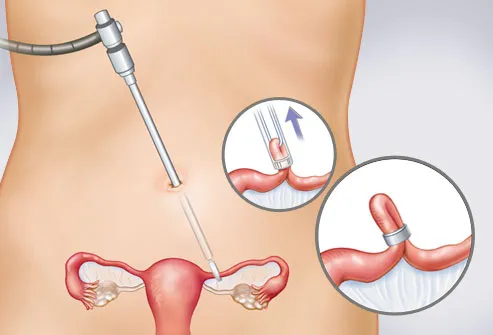
    A tubal ligation is performed under general, regional, or local anesthesia and can be performed as an outpatient procedure. The surgeon or ob/gyn uses one of several procedures in order to access a woman's Fallopian tubes (which run from the top part of her uterus to each ovary). A laparoscopy is a procedure in which a small incision is made just below the navel. A viewing tube (scope) can then be inserted through this incision to view and reach the Fallopian tubes. A minilaparotomy is a small incision in the lower abdomen that is sometimes used for tubal ligation most commonly in the postpartum period (after childbirth).
    Once the physician has access to a woman's Fallopian tubes, they are closed off by using a clip, cutting and tying, or cauterizing (burning) the tubes. The procedure takes anywhere from 10 to 45 minutes.
    Side effects of a tubal ligation may include infection, bleeding (hemorrhage), and those associated with being under general anesthesia.
    A tubal ligation blocks a woman's Fallopian tubes. As a result of the procedure, about 1 inch of each tube is blocked off. An egg can no longer travel down the tube to the uterus, and sperm cannot make contact with the egg. Tubal ligation should have no effect on a woman's menstrual cycle or hormone production.
    A woman's tubal ligation can be surgically reversed, usually with more success than in men who have had a vasectomy. About 1% to 2% of women in the US seek a reversal of tubal ligation.
    A tubal ligation does not protect a woman or her partner from sexually transmitted infections (sexually transmitted diseases, or STDs). It is also not an absolute method of birth control because a small percentage of women become pregnant after a tubal ligation. Pregnancy after tubal ligation is uncommon (occurring in less than 2% of women), and the risk of pregnancy appears to be related to age (younger women have more post-tubal ligation pregnancies) as well as the type of procedure used for the sterilization.
    Post-tubal ligation syndrome
    A condition referred to as "post-tubal ligation syndrome" (or post-tubal sterilization syndrome) has been the subject of debate in recent years. Proponents argue that women who have had tubal ligations are prone to menstrual irregularities and symptoms such as hot flashes and mood changes as a result of damage to the blood supply to the ovaries as a result of the procedure. This syndrome has also been described as consisting of symptoms such as changes in sexual behavior and emotional health, exacerbation of premenstrual symptoms, and menstrual symptomsnecessitating hysterectomy or tubal reanastomosis. A study of over 9500 women reported in 2000 in the New England Journal of Medicine, failed to confirm any association between tubal sterilization and menstrual problems, but some investigators suggest that a minority of women do report menstrual problems or other symptoms following the procedure.

    Hysteroscopic sterilization

    Hysteroscopic sterilization is a nonsurgical form of permanent birth control in which a physician inserts a 4-centimeter (1.6 inch) long metal coil into each one of a woman's two Fallopian tubes via a scope passed through the cervix into the uterus (hysteroscope), and from there into the openings of the Fallopian tubes. Over the next few months, tissue grows over the coil to form a plug that prevents fertilized eggs from traveling from the ovaries to the uterus.
    The procedure takes about 30 minutes, can be done in a doctor's office, and usually requires only a local anesthetic. During a 3-month period after the coils are inserted, women must use other forms of birth control until their physician verifies by an imaging test known as a hysterosalpingogram(HSG) that the Fallopian tubes are completely blocked.
    Like tubal ligation, this form of sterilization is permanent (not reversible) and is designed as an alternative to surgical sterilization which requires general anesthesia and an incision. About 6% of women who have the procedure develop side effects, mainly due to improper placement of the coils.
    This form of sterilization, like other methods of surgical sterilization, does not protect a woman or her partner from sexually transmitted diseases (STDs).

    Hysterectomy

    A hysterectomy is the surgical removal of a woman's uterus and, depending on her overall health status and the reason for the operation, perhaps her ovaries as well. No woman who has had a hysterectomy can become pregnant; it is an irreversible method of birth control and absolute sterilization. A laparoscopic hysterectomy (removal of the uterus through tiny incisions in the abdomen through which instruments are placed) is possible when there are no complications and no suspicion of cancer. A partial hysterectomy, which spares the cervix and removes the upper part of the uterus, is also a common surgical technique.
    If a woman has other chronic medical problems that may be helped by a hysterectomy (such as abnormally excessive menstrual bleeding, uterine fibroids, uterine growths), than this may be an appropriate procedure for her to consider. Otherwise, contraception should be considered a secondary benefit and not a sole reason to have the procedure.

    58-year-old Utah mom to give birth to daughter's daughter

    A 58-year-old Utah woman is set to give birth in a few weeks -- to her first grandchild.

    Julia Navarro is serving as a gestational surrogate for her daughter and son-in-law after the couple struggled with fertility problems.

    Navarro's daughter Lorena McKinnon said she began trying to have a baby with her husband, Micah McKinnon, three years ago.

    The 32-year-old Provo woman said she's had about a dozen miscarriages, with the longest pregnancy lasting 10 weeks.

    After several tries, the couple began looking for a surrogate. McKinnon said a friend and sister both considered carrying her baby, but ultimately decided against it.

    That's when her mother offered to step in.

    "As a family, we have to help each other," Navarro told The Salt Lake Tribune (http://bit.ly/1a40CaE ).

    Navarro had to undergo hormone shots for three months before an embryo fertilized by her daughter and son-in-law could be implanted. Because of her age, doctors had warned there was only a 45 percent chance the implantation would be successful.

    But the procedure was a success, and Navarro said she's had a smooth pregnancy carrying a developing baby girl.

    As with other surrogacy arrangements, the couple and Navarro needed three months of counseling.

    "The psychologists wanted to make sure we knew what we were getting into -- that we were mentally prepared," McKinnon said. "Mostly, surrogacy contracts are with people you don't know. It was weird to have a contract with my mom."

    It's unclear how rare it is for a woman to carry her own grandchild, but recent news reports have detailed similar relationships.

    Last year, a 53-year-old Iowa woman gave birth to her twin granddaughters. And in 2012, a 49-year-old woman in Maine gave birth to her grandson.

    McKinnon said she was grateful and overwhelmed by her mother's offer, which eases some of the obstacles and financial burdens for parents using a gestational surrogate.

    According to Utah law, surrogates must be 21 or older, financially stable and must have already given birth once.

    Couples must be married and are allowed to offer a reasonable payment to a surrogate.

    On average, a couple can spend about $60,000 on procedures and paying the surrogate, but McKinnon said her mother's offer to help is saving the couple about half of that.

    Both she and her daughter said they've bonded over the experience.

    The baby girl is due in early February.

    A cure for pancreatic cancer 'could be available within ten years', scientists claim

  • Scientists have found a drug that could eradicate the disease within a week
  • Cancerous cells create a protective barrier around pancreatic tumours
  • A new drug - AMD3100 - could break down this protective barrier
  • This would allow the body's immune system to attack the tumour
  • The drug has successfully cured mice - a human trial will start soon


  • Scientists believe they have found a possible cure for pancreatic cancer - the disease that Apple CEO Steve Jobs died of
    Scientists believe they have found a possible cure for pancreatic cancer - the disease that Apple CEO Steve Jobs died of
    A cure for pancreatic cancer could be on the horizon, according to researchers.
    Scientists at the University of Cambridge believe they have found a treatment that could eradicate the disease in just one week.
    Pancreatic cancer has few symptoms in its early stages and so is usually only diagnosed once it is too advanced to be tackled effectively.
    As a result, it has one of the poorest prognoses of any cancer. 
    Doctors had struggled to defeat the illness using the body's own immune system - a method known as immunotherapy.
    But researchers have recently discovered that this is because infected cells coat themselves in a ‘chemokine protein’ and form a protective barrier around the tumours.
    Now, staff at the Cancer Research UK Cambridge Institute have finally made a breakthrough that could one day lead to a cure.
    A new drug called AMD3100 - also known as Plerixafor - could be used to help block the formation of the protein and break down the cancer's barrier.
    The body's ‘T cells’ - which attack the cancerous cells - are then able to break through and fight the tumour.

    Researchers had been testing the drug on mice but now feel it is ready to be tested on humans - with a cure potentially available within the next ten years.
    Dr Douglas Fearon, from the research institute, has now claimed the breakthrough could be the first step towards a cure for many forms of the disease.
     

    He said: ‘We want to get the clinical trial on humans started up as soon as we can as it was so successful on mice. 
    ‘By enabling the body to use its own defences to attack cancer, this approach has the potential to greatly improve treatment of solid tumours.
    ‘The best possible scenario is that it will cause regression to a large proportion against pancreatic cancer.
    Experts at the University of Cambridge say the drug they have created could cure the disease (pictured) in just one week - they think it also has the potential to cure other cancers, such as lung and ovarian cancers

    ‘And that is not just restricted to pancreatic cancer but would be effective in many forms, including ovarian and lung cancer because they react similarly.
    ‘This could potentially cure cancer, and save all those lives lost each year to the disease.’
    Clinical trials are expected to take place in six months at Addenbrooke’s Hospital in Cambridge.
    Pancreatic cancer is the fifth most common cause of cancer-related death in the UK and the eighth most common worldwide.
    Tumour removal is the most effective treatment, but it is suitable for just one in five patients.
    It affects men and women equally, and is most common in people over the age of 60.
    Fewer than 20 per cent of pancreatic cancer patients are currently still alive a year after diagnosis and less than four per cent survive for five years.


    Read more: http://www.dailymail.co.uk/health/article-2534683/A-cure-pancreatic-cancer-available-ten-years-scientists-claim.html#ixzz2pqrIYl3x 
    Follow us: @MailOnline on Twitter | DailyMail on Facebook